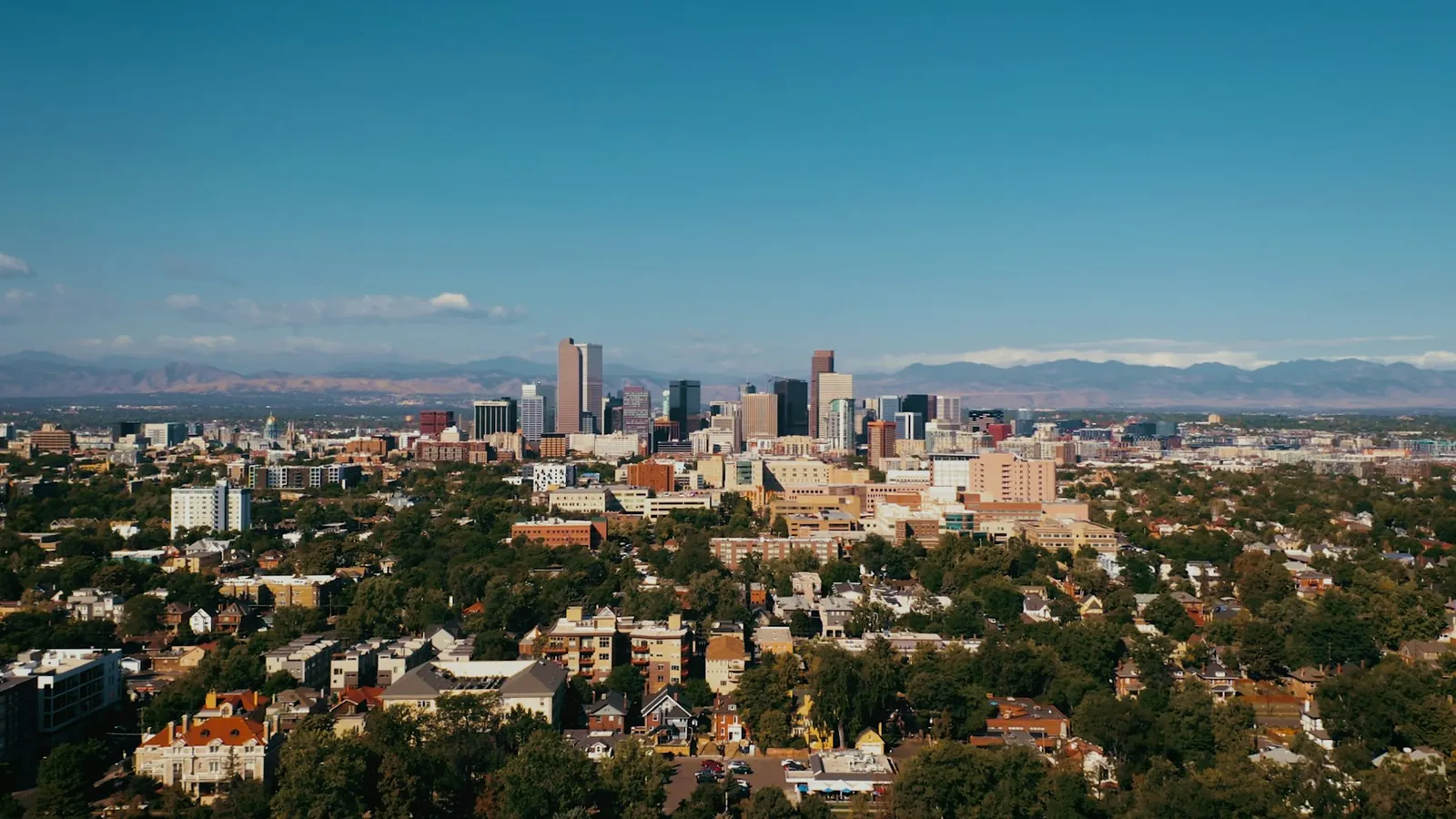
Is today a no-burn day in Denver?
Check the state forecast issued every day at 4 p.m. from October 31 to March 31, or call the recorded hotline at 303-758-4848. On an Action Day, open wood fireplaces and uncertified stoves must stay cold in the seven-county metro below 7,000 feet. Gas fireplaces are not restricted.
Denver Fireplace & Chimney · October 19, 2026
Where the answer comes from
What people call a no-burn day, the state calls an Action Day. The forecasts come from the Winter High Pollution Advisory Program, which the Colorado Department of Public Health and Environment (CDPHE) runs through its Air Pollution Control Division. According to the division's advisory page, winter forecasts are issued every day from October 31 through March 31 at 4 p.m. When the air is expected to be bad, the forecast declares an Action Day, and indoor burning restrictions come with it.
CDPHE says the restrictions apply November through March. The same advisory page says the 2026/2027 winter program begins November 1. Outside that window there are no Action Day burning restrictions, though Denver still limits what you may burn at any time of year (more on that in our post on Denver fireplace rules and fines).
The legal basis is a state law, C.R.S. 25-7-106.3. It tells the Air Quality Control Commission to limit wood-burning stoves and fireplaces on high pollution days in parts of Adams, Arapahoe, Boulder, Denver, Douglas and Jefferson counties, and it leaves out areas above 7,000 feet.
Four ways to check before you light a fire
Make it a habit on any cold evening between November and March. The forecast lands at 4 p.m., so checking before dinner is the easy rule.
- The state advisory page at apcd.state.co.us/advisory.aspx shows the current forecast and says whether it is an Action Day.
- The recorded air quality advisory hotline: 303-758-4848.
- Daily email alerts, which you can sign up for at colorado.gov/airquality/request_alerts.aspx (linked from the advisory page).
- For questions about the rules, or to report burning on an Action Day, CDPHE lists a 24-hour line: 303-692-3280.
What an Action Day means for your fireplace
The advisory page says Action Days trigger mandatory restrictions that limit indoor burning to approved devices only, along with voluntary driving cuts and health advice. An Action Day called for visibility alone still triggers the indoor burning restriction, but only in the seven-county Denver-Boulder metro.
CDPHE's FAQ is blunt about fireplaces: uncertified stoves, heaters and conventional fireplaces must not be operated on Action Days in the restricted area, regardless of the fuel. That means a classic open brick fireplace is off on those days, whether you planned to burn split oak, manufactured logs or pellets in a basket.
Gas is the exception. Denver's air pollution code defines a solid-fuel-fired device and says it does not include natural gas-fired devices, and Jefferson County's policy likewise leaves out natural gas fireplace logs. A gas fireplace, gas insert or set of gas logs can run on an Action Day.
Who has to follow it, and who is exempt
CDPHE lists the restricted area as Denver, Boulder, Broomfield, Douglas and Jefferson counties, plus Adams and Arapahoe counties west of Kiowa Creek, below 7,000 feet. For most of our service area, that covers every town from Longmont to Castle Rock and from Golden to Aurora. Homes high in the foothills above 7,000 feet are exempt from the use restriction.
The state exemption list, from CDPHE's restrictions page and FAQ, is short:
- EPA-certified Phase III wood stoves and fireplace inserts.
- EPA-certified or Colorado-approved pellet stoves and inserts (Colorado approval means the model tested under 4.1 grams of particulates per hour).
- Colorado-approved masonry heaters.
- Devices in homes above 7,000 feet.
- An uncertified device that is the home's primary heat source and has an exemption letter from the state or local jurisdiction.
Why the bad days come in winter
On calm winter days the Front Range often sits under a temperature inversion, a lid of warmer air that traps cold air and smoke near the ground. When CBS Colorado reported on a 2021 burning restriction, it noted that a strong temperature inversion was in place. Wood smoke released under that lid has nowhere to go, which is why the state targets fireplaces on exactly the cold, still evenings when people most want a fire.
That timing is what frustrates owners of open fireplaces. The nights you most want to use it are the nights the state is most likely to say no.
If you want a fire on every cold night
CDPHE's FAQ says an open masonry fireplace may be used on Action Days only if it is equipped with gas logs, an EPA Phase III insert, an approved pellet insert or an electric device. Those are the real options. Typical ranges are gas logs $500–$2,000, a gas insert $2,000–$8,000, and an EPA wood insert with a liner $3,000–$7,000. We cover the trade-offs in our post on making an open fireplace usable on burn days.
Before choosing, have the chimney looked at. Our inspection is free: we go top to bottom, take photos, and give you a written price before any work. We book Sunday to Friday in 3-hour windows and call to confirm.
FAQ
More answers
Does a no-burn day apply to my gas fireplace?
No. Denver's code says a solid-fuel-fired device does not include natural gas-fired devices, so gas fireplaces, gas inserts and gas logs can run on an Action Day.
Can I burn on Action Days if I live in the foothills?
If your home is above 7,000 feet, the use restriction does not apply. It does still apply to the rules for selling and installing new stoves, which CDPHE says cover the whole seven-county metro.
My wood stove is my only heat. Do I have to stop?
State law exempts people who use a stove or fireplace as their primary heat, but CDPHE says the uncertified device needs an exemption letter from the state or your local jurisdiction. Get the letter before winter.
Are there no-burn days in summer?
Not for fireplaces. Summer Action Days are about ozone. CDPHE says the indoor burning restrictions apply November through March.
Keep reading
More from the blog
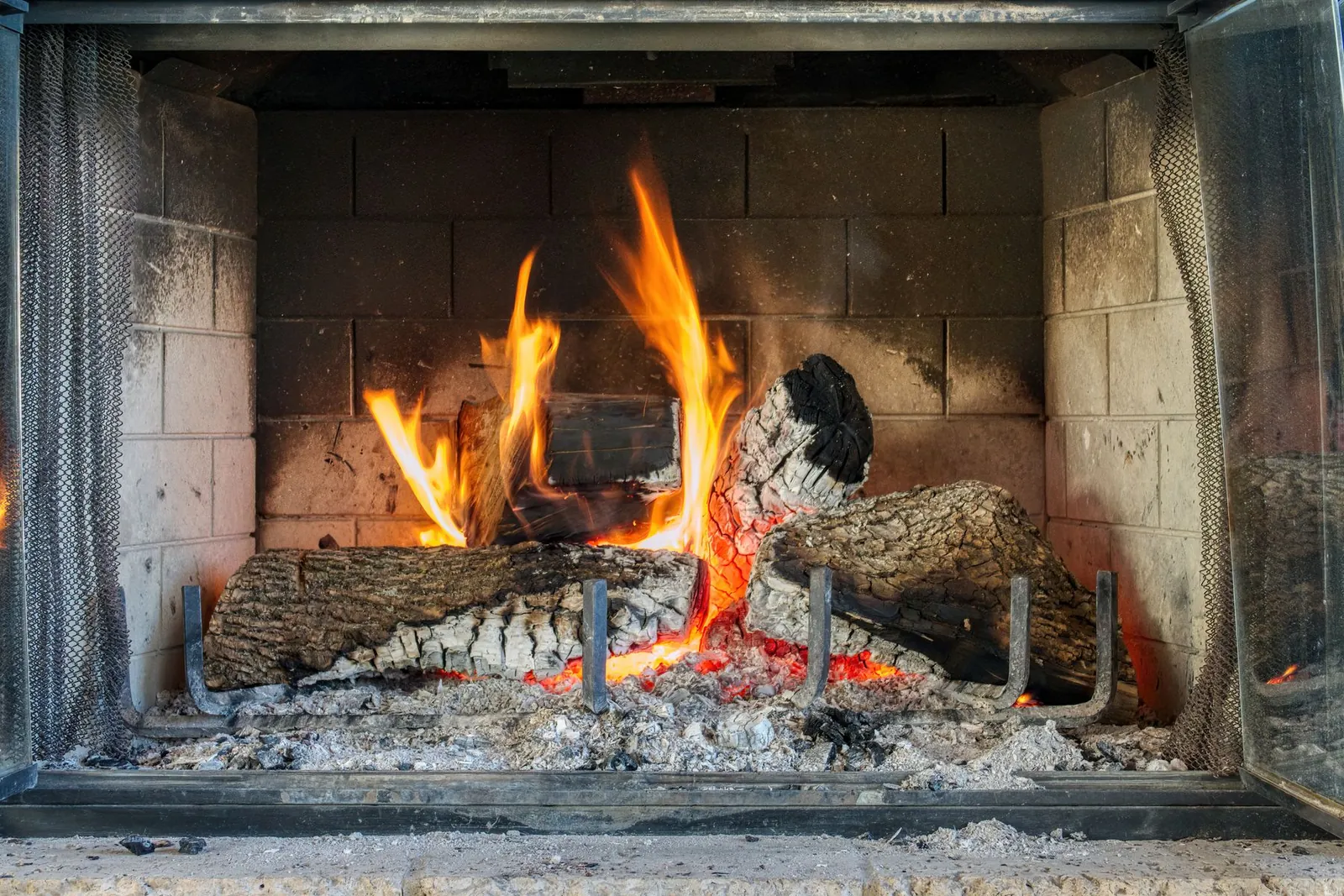 Denver fireplace rules and fines: what the code actually saysBurning on a Denver Action Day carries a $250 minimum fine, up to $2,000 per day. The code sections, what you may burn, and what can be installed.
 Hail hit your roof? Check these 4 chimney partsAfter a Front Range hailstorm, check the chimney cap, chase cover, crown and flashing. What hail damage looks like on each, and how to document it.
 Galvanized vs stainless chase covers: which holds up to Denver hail?Why so many Denver-area chase covers rust after hail, how galvanized and stainless steel compare, and what shape details keep water out of the chase.
Book online
Pick a day. We'll bring a ladder.
Free inspection in a 3-hour window: 8 to 11, 11 to 2, or 2 to 5. We call to confirm before we arrive.